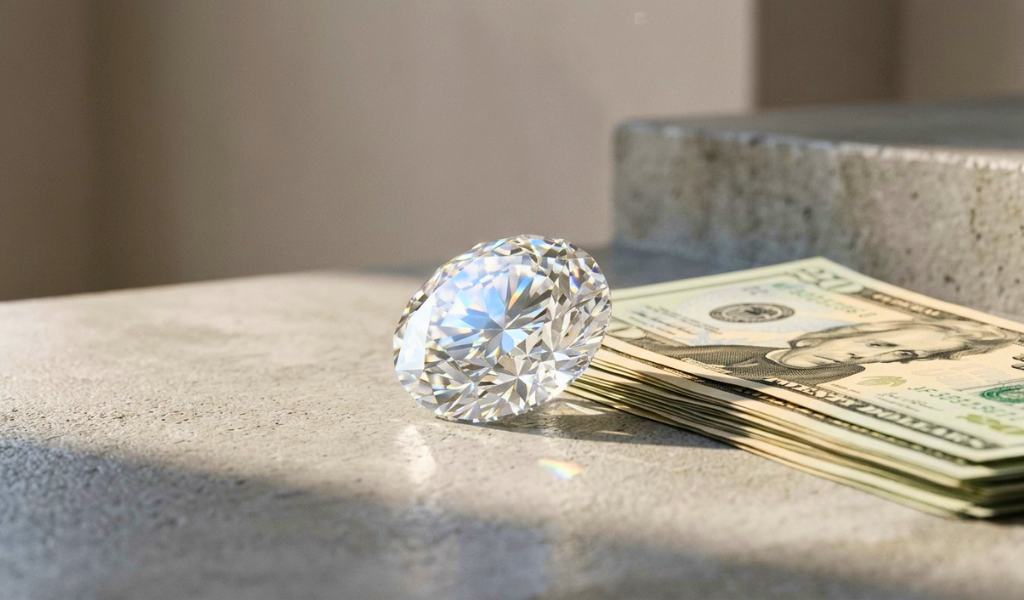
What Affects the Price When You Sell a Loose Diamond to a Buyer?
If you are looking to sell loose diamonds, be aware that the price the buyer will pay you depends on the current market value of the stone and not just what you paid for it. The valuation considers a variety of details like carat weight, cut, color, clarity, certification, condition, shape and demand. These factors help a buyer judge the desirability of a diamond and the price it can reasonably command in the resale market.
A diamond’s original retail price also does not guarantee that it will be worth the same amount when resold. Retail and resale pricing are different, and this is why it’s important to understand the valuation process before accepting an offer.
Quick Summary
- The 4Cs still form the main starting point for the evaluation of a diamond.
- Certification provides written information about the quality and characteristics of the stone.
- The cut and shape can affect how attractive a diamond is and how marketable it is to buyers.
- Damage, treatments, or missing documentation can affect the final offer.
- The resale price of different diamond types may vary according to current demand.
What Determines the Value of a Loose Diamond?
There is no single price that applies to every loose diamond. Buyers look at the complete stone rather than one specification in isolation.
Carat weight is important, but it does not tell the whole story. For example, a two-carat diamond with a good cut, good color, good clarity and good certification might be worth more than a two-carat diamond with a weaker cut, weaker color and weaker clarity. The stone’s condition matters as well. Chips, scratches, abrasions, or other damage can detract from its appeal and impact the cost of getting it ready for resale.
For anyone searching how much is a loose diamond worth, the most useful answer comes from looking at the individual diamond and its current market position. An old appraisal or original receipt may provide useful background, but neither necessarily represents the amount a buyer will offer today.
Retail Price and Resale Value Are Different
Getting a diamond from a jeweler isn’t just about the diamond, but the business that makes it available: the craftsmanship, overhead, branding and retail markup. These costs are not passed through to the secondary market. That is why the resale value of a loose diamond may be less than the purchase price, even if the diamond has not been materially altered.
How the 4Cs Affect Diamond Resale Price?
The 4Cs – carat, cut, color, and clarity are the basic system used to describe diamond quality. Each one provides useful information, but their effect on the final value depends on how they work together.
Carat Weight
Carat refers to the diamond’s weight. Larger diamonds are generally more valuable when their other quality characteristics are strong. However, adding carat weight does not automatically mean the resale price will rise by the same proportion.
Cut
Cut affects the way a diamond handles light. Proportions, symmetry, and polish all contribute to the overall appearance. A well-cut diamond can look brighter and more balanced, making it more appealing to potential purchasers.
Color
With white diamonds, color grading describes how much body color is present. Diamonds with higher color grades can command stronger prices, although the difference depends on the rest of the stone’s specifications.
Clarity
Clarity measures the presence of internal inclusions and external blemishes. Higher clarity can increase value, but visibility matters too. An inclusion that is difficult to see may have less practical impact than one that is obvious to the eye.
Together, these characteristics have a direct influence on the diamond resale price.
Does GIA Certification Increase Diamond Value?
A GIA grading report doesn’t mean a diamond is worth more, but it can be easier to verify the characteristics. The report includes documented information on details such as carat weight, color, clarity and other grading characteristics. Such documentation can instill greater confidence in the buyer when evaluating the stone. It also allows the comparison of the diamond with other stones of similar specifications.
A grading report, where available, must be provided at the time of sale. Other records like purchase documents or previous appraisals can also be useful. A diamond without certification can be evaluated. The buyer may simply need to examine and grade the stone independently before determining an offer.
How Diamond Shape and Cut Affect Resale Value?
Shape and cut describe different aspects of a diamond. The shape is the silhouette of the stone, like round, oval, cushion, pear or emerald. Cut is how the diamond is proportioned and how well the facets reflect light.
Round diamonds traditionally have strong recognition in the market, while fancy shapes can appeal to buyers looking for a particular style. But demand is not immutable. Certain shapes may become more desirable than others, and taste may change.
Of course, cut quality is also very important because two diamonds of the same shape and carat weight can look very different. If a diamond has a weaker cut, a diamond with better proportions and light performance may be of more interest. These differences can affect the Diamond Valuation For Resale, especially when a buyer is looking at several similar stones.
How Market Demand Affects Loose Diamond Prices?
The price of diamonds is also affected by the needs of the buyer at that point in time. Some cuts, carat sizes, colors, and clarity levels could be more desirable than others. It should be noted that resale value is not dependent solely upon the value of the diamond itself. A buyer also needs to consider how easily the stone can be resold and what comparable diamonds are currently being offered for.
Market demand can therefore explain why two diamonds with broadly similar specifications do not always receive identical offers.
Why Offers Can Vary Between Buyers?
Different buyers may have different resale channels, customer bases, inventory needs, and pricing strategies, so there is not always one universal resale price for a given diamond.
You can have the stone appraised by a specialist who will be able to give you a more realistic figure and explain how they arrived at their offer.
Practical Information Table
| Factor | What Is Evaluated | Possible Effect on Resale Price |
| Carat | Diamond weight | Larger stones may command more when quality is strong |
| Cut | Proportions, symmetry, polish, and light performance | Better cut can increase desirability |
| Color | Degree of body color | More desirable grades may support a higher value |
| Clarity | Inclusions and blemishes | Higher clarity can improve value |
| Certification | Independent grading documentation | Helps verify the diamond’s characteristics |
| Shape | Round or fancy shapes | Value can vary with buyer demand |
| Condition | Chips, scratches, and other damage | Damage can lower the offer |
| Market demand | Current interest in particular diamonds | Strong demand can support better resale prices |
What to Prepare Before You Sell Loose Diamond?
Obtain any information regarding the diamond before its evaluation. Documentation such as a grading report from the GIA or another certified organization, past transactions, evaluations, and all other pertinent documents will assist in determining the background and characteristics of the diamond.
Another thing that will be important to have is knowledge of the diamond basics, including its carat weight, color, clarity, cut, and shape. Most importantly, avoid judging an offer only against the original retail price. The resale market considers the diamond’s present characteristics and demand.
Also Read: Where Can I Get the Highest Price for Loose Diamonds Online?
Conclusion
The price you get for selling a loose diamond is contingent upon several factors working together. Certification , shape , polish , cut quality , condition, and current market demand can all influence the final offer . The 4Cs are the basis upon which these can be influenced.
Having this information provides you with a better understanding of loose diamond resale value before engaging in a transaction. The original price is not necessarily what the stone is worth today, and a current appraisal from an experienced diamond buyer can help determine what the stone may realistically be worth at this time.
If you’re contemplating selling, a professional diamond valuation is a wise first step. This means you can know the characteristics of the stone, where it currently sits in the market, and what it could be resold for, before you make a choice.
FAQs on Sell Loose Diamond
How much is a loose diamond worth?
The value of a loose diamond depends on its carat weight, cut, color, clarity, certification, condition, shape, and current market demand. An individual assessment is needed to determine its likely resale value.
What determines the resale price of a loose diamond?
The 4Cs are the primary quality factors, but certification, shape, condition, and market demand also affect the price a buyer may offer.
Does a GIA certificate increase the resale value of a diamond?
A GIA certificate does not guarantee a higher resale price. It provides independent grading information that can help a buyer verify the diamond’s characteristics and assess it more confidently.
Can I sell a loose diamond without a certificate?
Yes. A loose diamond can be evaluated without a grading report. However, certification can make it easier to verify the stone’s quality and compare it with other diamonds in the market.
Why is my diamond worth less when I sell it than when I bought it?
The original retail price includes costs and margins that do not transfer directly to the resale market. A resale offer is based on the diamond’s current characteristics, demand, and what a buyer can reasonably resell it for.